Find dual sided non scratch kitchen scrubber for Tableware, Toilet, and Clothes
Source 30 verified listings for the dual sided non scratch kitchen scrubber to compare specifications and pricing. Buyers can evaluate options featuring sponge materials, various edge types, and customization availability for kitchen, bathroom, and laundry applications.
Key considerations
Products List





Comprehensive Sourcing Guide
Strategic Sourcing Guide for Dual Sided Non-Scratch Kitchen Scrubbers
Understanding Product Composition and Technical Specifications
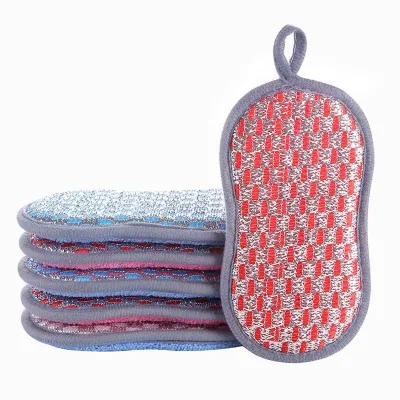
When sourcing a dual-sided non-scratch kitchen scrubber, the primary objective is to identify a product that balances aggressive cleaning power with surface protection. The market offers a variety of configurations, but the most effective units typically feature a composite construction. Based on available industry data, the core material often involves high-density sponge, which provides the necessary softness to prevent scratching on delicate cookware, glass, and non-stick surfaces. This sponge layer is frequently paired with a secondary abrasive side, often constructed from materials such as nylon or specific polymer blends, to handle stuck-on food residues without damaging the substrate.
The physical dimensions of the scrubber are critical for ergonomic handling and effective reach. Observed specifications in the sector indicate standard pack sizes ranging from compact units measuring approximately 8 x 7.6 x 5.2 cm to larger variants around 28.5 x 13 x 10 cm. These dimensions ensure the tool fits comfortably in the hand while providing sufficient surface area for cleaning large pots or intricate pans. The form factor is predominantly a solid block or a rectangular pad, designed to be held securely during the washing process.
Material composition is the defining factor for the "non-scratch" claim. The sponge component must be of a quality that retains its structure when wet, preventing it from disintegrating and leaving debris on dishes. In some configurations, the handle or structural elements may incorporate rubber or thermoplastic rubber (TPR) to enhance grip and durability. The abrasive side, often made of nylon or polypropylene (PP), must be engineered with a specific texture that is coarse enough to remove carbonized food but fine enough to leave the surface of stainless steel or ceramic unmarred. Buyers should verify that the specific model they select explicitly lists these material properties, as generic descriptions can sometimes obscure the actual abrasiveness of the product.
Compliance, Safety, and Material Standards
In the realm of kitchenware, compliance is not merely a regulatory formality but a critical safety requirement. Any product intended for direct contact with food preparation surfaces must adhere to strict material safety standards. While specific certification numbers vary by region, the fundamental requirement is that the materials used—whether sponge, nylon, or rubber—must be food-grade and non-toxic. Buyers must ensure that the supplier can provide documentation confirming that the materials do not leach harmful chemicals into food or water during use.
The manufacturing origin plays a significant role in the perceived quality and compliance of the product. A substantial portion of the global supply for these items originates from China, where established manufacturing hubs produce a wide range of cleaning tools. However, the origin alone does not guarantee compliance. The production facility must operate under a quality management system that ensures consistency in material sourcing and assembly. For instance, the "Yancheng Oukai Sponge Factory" is an example of a known manufacturing entity in this sector, but buyers should not assume all products from a region share the same quality baseline without verification.
Regarding standards, products are often evaluated against general safety benchmarks for household cleaning tools. While specific standard codes like "1174cm" or "87.65.2cm" appear in product listings, these are often dimensional specifications rather than safety standards. True safety compliance involves verifying that the product meets international food contact regulations, such as FDA (USA) or LFGB (Europe) standards, depending on the target market. Buyers should explicitly request test reports or certificates of compliance that verify the absence of heavy metals, phthalates, or other hazardous substances in the sponge and bristle materials.
Cost Drivers and Pricing Dynamics
The pricing of dual-sided non-scratch kitchen scrubbers is influenced by a complex interplay of factors, including material quality, manufacturing complexity, and order volume. The observed price range in the market is extensive, spanning from as low as $0.03 to as high as $2,400. This wide variance is not indicative of a single product type but rather reflects the difference between bulk commodity items and specialized, high-volume procurement contracts.
For individual units or small sample orders, the cost is driven primarily by the unit price and the minimum order quantity (MOQ). The MOQ can vary significantly, with some suppliers offering low barriers to entry at 1 piece, while others require orders of 1,000 to 30,000 pieces. A higher MOQ typically correlates with a lower unit cost, as the fixed costs of mold creation, setup, and logistics are amortized over a larger volume. Conversely, suppliers offering low MOQs often charge a premium per unit to cover the inefficiencies of small-batch production.
Material costs are another significant driver. The use of high-grade, food-safe sponges and durable nylon bristles increases the base cost of the product. Additionally, the complexity of the "dual-sided" design, which requires bonding two different materials securely, adds to the manufacturing expense. Packaging also plays a role; options such as OPP bags, cartons, or combined OPP+Carton packaging affect the final price. Buyers seeking to optimize costs should focus on negotiating based on volume tiers and selecting packaging that balances protection with cost-efficiency. It is crucial to distinguish between the price of a single unit and the total landed cost, which includes shipping, tariffs, and handling fees, especially when importing from international markets.
Typical Applications and Functional Versatility
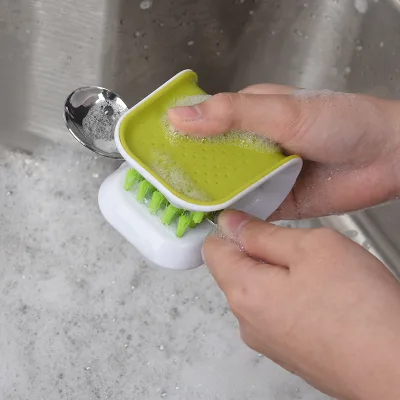
The primary application for a dual-sided non-scratch kitchen scrubber is, as the name suggests, in the kitchen. These tools are designed to handle a wide array of cleaning tasks, from washing delicate glassware and non-stick pans to scrubbing heavy-duty pots and baking trays. The dual-sided design allows users to switch between a gentle cleaning action for sensitive surfaces and a more robust scrubbing action for stubborn grime, eliminating the need to carry multiple cleaning tools.
Beyond the kitchen, the versatility of these scrubbers extends to other domestic and commercial environments. The product attributes indicate usage in toilet and bath areas, where the non-scratch feature is equally valuable for cleaning porcelain and acrylic surfaces without causing micro-scratches that can harbor bacteria. In personal care contexts, the soft sponge side can be used for gentle exfoliation or cleaning, while the abrasive side handles tougher stains.
In commercial settings, such as hotels, restaurants, and institutional kitchens, the durability and efficiency of these scrubbers are paramount. The "Powerful Cleaning" strength and "Soft Bristle" selling points make them suitable for high-volume dishwashing operations where speed and surface preservation are critical. Furthermore, the product's application is not limited to indoor use; some variants are marketed for garden, outdoor, and road cleaning, suggesting a robust construction capable of handling dirt and debris in various environments. The "Kitchen Clean" function is the core identity, but the material composition often supports a broader range of cleaning duties, making it a versatile asset for both residential and commercial procurement.
Supplier Evaluation and Quality Control Protocols
Selecting the right supplier is a critical step in ensuring the reliability and quality of the sourced scrubbers. Buyers should prioritize suppliers who demonstrate transparency in their manufacturing processes and provide clear product specifications. The presence of customization options, such as the ability to modify the product model, color, or packaging, indicates a supplier's flexibility and capacity to meet specific buyer requirements. However, buyers must also be aware that not all suppliers offer the same level of customization; some may only offer non-customized, stock items.
Quality control should be a central component of the supplier evaluation process. Suppliers with a "Quality: Inspection Approval" attribute suggest that they have internal or third-party checks in place to ensure product consistency. Buyers should verify the supplier's quality assurance protocols, including how they handle defects, their return policies, and their adherence to production standards. The "Service: Prompt Delivery" attribute is also a key indicator of a supplier's reliability, as delays in procurement can disrupt operations.
When evaluating suppliers, buyers should look for those who provide detailed product models, such as "KCSK-78," "OKHM," or "CWOK-058." These specific identifiers help in tracking the exact product specifications and ensuring that the ordered item matches the sample. Additionally, suppliers who offer OEM (Original Equipment Manufacturer) services can be valuable for buyers looking to brand the product under their own label. The "Market: Global" attribute suggests that the supplier has experience in international trade and can navigate the complexities of export logistics.
Long-Term Procurement and Strategic Considerations
For buyers engaging in long-term procurement, the focus should shift from immediate cost savings to supply chain stability and product longevity. The "Low Absorbency" attribute of some scrubbers is a specific performance characteristic that may be desirable for certain applications where water retention is a concern, but it is not a universal requirement. Buyers should assess whether the specific absorbency level of the scrubber aligns with their cleaning protocols.
The "Stocked" feature indicates that some suppliers maintain inventory, which can reduce lead times and provide flexibility for urgent orders. However, for long-term contracts, buyers should consider the supplier's capacity to scale production. The "Customized" option allows for branding and design changes, which can be a strategic advantage in building a unique product line. Buyers should also consider the environmental impact of the materials used, as sustainability is becoming an increasingly important factor in procurement decisions.
Finally, the "Sale: Online" attribute highlights the availability of these products through digital channels, which can streamline the sourcing process. However, buyers should remain cautious of online-only suppliers and ensure they have a mechanism for direct communication and contract enforcement. By focusing on suppliers with a proven track record, clear quality controls, and flexible customization options, buyers can secure a reliable supply of dual-sided non-scratch kitchen scrubbers that meet their operational needs and quality standards.
FAQs
What materials are used for dual sided non scratch kitchen scrubbers?
These scrubbers typically combine high-density sponge with nylon or polypropylene bristles. The sponge prevents scratching on delicate surfaces while the abrasive side handles stuck-on food residues effectively.
Which dimensions are standard for these kitchen cleaning tools?
Standard pack sizes range from compact units measuring 8 x 7.6 x 5.2 cm to larger variants around 28.5 x 13 x 10 cm. These dimensions ensure ergonomic handling and sufficient surface area for various cleaning tasks.
Can buyers request customization for these scrubbers?
Yes, customization is available for specific models and packaging requirements. Some suppliers offer custom branding or design changes, while others provide non-customized stock items with fixed specifications.
How does the absorbency level affect scrubber performance?
Some models feature low absorbency to prevent water retention and bacterial growth. This characteristic is useful for specific cleaning protocols where quick drying and hygiene are prioritized over water absorption.
What is the minimum order quantity for these products?
Minimum order quantities vary significantly, ranging from 1 piece for samples to 30,000 pieces for bulk orders. Specific models may require 500 or 1000 pieces as the baseline for procurement.
Where are these scrubbers typically manufactured?
The majority of these products originate from China, where established manufacturing hubs produce a wide range of cleaning tools. Specific factories like Yancheng Oukai Sponge Factory are known in this sector.
What packaging options are available for these items?
Packaging options include single packs, OPP bags, cartons, or combined OPP and carton configurations. The choice of packaging affects the final price and protection level during shipping.